How SAP Is Engine-Rooming the Future of Industrial Manufacturing.

The industrial manufacturing landscape is undergoing a massive shift. Between volatile supply chains, the push toward Engineer-to-Order (ETO) / Configure-to-Order (CTO) models, and demands for sustainable operations, legacy systems simply can’t keep up.

To stay resilient, manufacturers are evolving into Autonomous Enterprises—and SAP sits right at the core of this transformation.

By connecting shop-floor execution directly with top-floor decision-making, SAP provides the digital thread needed to scale sustainably, optimize margins, and react to market disruptions in real time.

Here is a breakdown of how SAP powers every core line of business in industrial manufacturing:

R&D and Integrated Product Engineering

  • Key Solutions: SAP PLM, SAP Engineering Control Center, Product Lifecycle Costing
  • The Impact: Innovation fails if it can’t be manufactured profitably. SAP links mechanical, electrical, and software engineering into a single source of truth.
  • Why it Matters: Engineers can simulate costs early in the product lifecycle, embedding circularity and sustainability principles directly into product design while cutting time-to-market.

Strategic Procurement & Direct Materials

  • Key Solutions: SAP Ariba, SAP Business Network Supply Chain Collaboration
  • The Impact: Sourcing direct materials in industrial manufacturing requires tight coordination. SAP automates invoice management, uses AI for strategic sourcing, and enables real-time collaboration with direct material suppliers.
  • Why it Matters: Protects margins against inflation and minimises supply chain vulnerabilities before production hits a bottleneck.
  • Key Solutions: SAP Integrated Business Planning (IBP), SAP Extended Warehouse Management (EWM), SAP Transportation Management (TM)
  • The Impact: Provides end-to-end visibility across logistics flows. AI-driven algorithms balance supply and demand, forecast feature-level requirements for complex product variants, and optimize warehouse storage.
  • Why it Matters: Elevates order availability transparency and ensures fulfillment strategies align with overall profitability.

Manufacturing Planning & Shop Floor Execution

  • Key Solutions: SAP Digital Manufacturing (DMC), SAP Asset Management, Embedded AI for Quality Inspection
  • The Impact: Connects shop-floor machines, IoT devices, and workers directly to ERP workflows. Embedded AI handles automated visual inspection to catch defects in real time.
  • Why it Matters: Minimises equipment downtime via predictive asset maintenance and lowers scrap rates, whether running Make-to-Stock (MTS) or highly complex Engineer-to-Order (ETO) lines.

Quote-to-Cash & Commercial Operations

  • Key Solutions: SAP CPQ, SAP Commerce Cloud, SAP Cloud ERP for Sales
  • The Impact: Selling complex, multi-configuration equipment requires dynamic pricing and seamless order processing.
  • Why it Matters: Uses AI-driven recommendations to speed up custom quoting without eroding margins, connecting customer demand signals directly back into operational planning.

Service & Field Operations Management

  • Key Solutions: SAP Service Cloud, SAP Field Service Management, SAP Business Network Asset Collaboration
  • The Impact: Modern manufacturers don’t just sell hardware—they sell uptime and subscription-based service contracts (Equipment-as-a-Service).
  • Why it Matters: AI schedules and dispatches field technicians efficiently, while unified asset tracking drives long-term customer lifetime value (LTV).

Finance & Human Capital Management (HCM)

  • Key Solutions: SAP S/4HANA Finance, SAP SuccessFactors
  • The Impact: Real-time predictive analytics and automated sub-ledger reconciliation shorten close cycles and lower Days Sales Outstanding (DSO).
  • Why it Matters: Keeps working capital healthy while ensuring workforce skills align with modern Industry 4.0 shop-floor requirements.

The Big Takeaway: AI & Connected Processes

With tools like Joule AI embedded across SAP’s cloud ecosystem, industrial manufacturers aren’t just automating back-office tasks they are building self-correcting supply chains, predictive maintenance models, and agile production lines.

Is your manufacturing stack ready for the Autonomous Enterprise transition, or are disconnected silos still slowing down your shop floor?

Partnering for Success: Why AAKIT Technologies?

Transforming complex manufacturing processes into an agile, AI-driven ecosystem requires more than just standard software setup it demands deep shop-floor expertise. With over 35 years dedicated to industrial manufacturing and a 100% success rate across global SAP rollouts, AAKIT Technologies bridges top-floor strategy with shop-floor reality.

By deploying SAP S/4HANA Cloud, BTP, and Joule AI with a clean-core approach, AAKIT empowers manufacturers to shorten cycle times, protect profit margins, and unlock true autonomous operations.

Ready to modernize your manufacturing stack? Reach out to our team at AAKIT Technologies to start your SAP transformation journey today.

👉 Get in Touch

Formulas, Feedstocks, and Future-Proofing: How SAP Is Transforming Chemical Manufacturing

The global chemical industry operates under intense pressures. Between wild feedstock price swings, stringent global Environmental, Health, and Safety (EHS) regulations, complex batch traceability demands, and the urgent push for circular sustainability, legacy systems are hitting their breaking points.

To remain profitable and resilient, chemical enterprises must transform into Autonomous Enterprises where real-time shop-floor execution feeds directly into strategic, top-floor decision-making.

SAP sits at the heart of this operational evolution. Here is a breakdown of how SAP’s Autonomous Enterprises ecosystem and embedded AI (such as Joule) drive agility across every core line of business in chemical manufacturing:

R&D and Recipe Management

  • Key Modules: SAP PLM (Product Lifecycle Management), SAP EHS (Environment, Health & Safety)
  • The Impact: Chemical innovation requires managing complex formula versions, hazardous raw materials, and continuous regulatory compliance.
  • Why It Matters: SAP digitalises product development by standardising recipe management, enforcing early safety assessments, and calculating product carbon footprints during design to accelerate time-to-market safely.

Strategic Procurement & Direct Materials

  • Key Modules: SAP Ariba, SAP Business Network Supply Chain Collaboration, SAP MM (Materials Management)
  • The Impact: Feedstock and raw material prices are notoriously volatile. SAP automates direct materials procurement and enables real-time collaboration with key chemical suppliers.
  • Why It Matters: AI-driven strategic sourcing protects margins against raw material price shocks, automates dangerous goods classification, and ensures contract compliance before supply chain bottlenecks occur.

Supply Chain & Batch Logistics

  • Key Modules: SAP Integrated Business Planning (IBP), SAP Extended Warehouse Management (EWM), SAP Transportation Management (TM)
  • The Impact: Chemical supply chains require strict lot-level traceability, hazardous material segregation, and temperature-controlled logistics.
  • Why It Matters: AI-driven algorithms align supply and demand forecasting, optimise warehouse storage according to strict hazard classes, and provide full batch traceability from raw material receipt to end-customer delivery.

Manufacturing Planning & Shop Floor Operations

  • Key Modules: SAP PP-PI (Production Planning for Process Industries), SAP Digital Manufacturing (DMC), SAP Asset Management, SAP QM (Quality Management)
  • The Impact: Connects continuous processing equipment, tank farms, and batch reactors directly into ERP workflows.
  • Why It Matters: Automates yield variance tracking, streamlines process orders, and uses predictive asset management to minimise costly plant shutdowns and maintain strict quality standards.

Commercial Operations & Quote-to-Cash

  • Key Modules: SAP CPQ, SAP Commerce Cloud, SAP Cloud ERP for Sales
  • The Impact: Chemical sales involve complex price matrices, volume discounts, dynamic surcharge calculations (e.g., freight/raw material indexes), and strict contract enforcement.
  • Why It Matters: Speeds up order cycles and automates price execution to protect margins while keeping customer interactions transparent and efficient.

Finance & Enterprise Performance

  • Key Modules: SAP S/4HANA Finance, SAP Business Data Cloud
  • The Impact: Unifies financial accounting, product costing, and inter – company transfers into a single source of truth.
  • Why It Matters: Shortens reporting cycles, calculates precise product cost and margin visibility down to the individual batch level, and improves overall capital efficiency.

Sustainability & EHS Compliance

  • Key Modules: SAP Sustainability Control Tower, SAP EHS Management
  • The Impact: Tracks Scope 1, 2, and 3 emissions, hazardous waste disposal, and workplace health safety across global plant locations.
  • Why It Matters: Converts compliance obligations into competitive advantages by embedding circular economy metrics and automated regulatory reporting straight into core business operations.

The Big Takeaway: AI & Connected Processes

With tools like Joule AI embedded across SAP Autonomous Enterprises and Business Technology Platform (BTP), chemical leaders aren’t just reacting to market disruptions they are building self-correcting supply chains, predictive asset operations, and agile production ecosystems.

Is your enterprise stack equipped to handle volatile feedstocks and strict compliance demands, or are disconnected systems holding back your plants?

Building the Chemical Autonomous Enterprise with AAKIT

The journey to a fully connected, AI-driven chemical enterprise isn’t about altering your operational core it’s about harmonizing your recipes, supply networks, and compliance standards into a single source of truth.

Navigating this digital shift requires a partner who understands the unique “tribal knowledge” of chemical manufacturing. Backed by 35+ years of SAP consulting excellence and a proven track record across international markets, AAKIT Technologies (www.aakit.com) empowers chemical enterprises to deploy SAP Autonomous Enterprise and Business Technology Platform (BTP) seamlessly.

From dynamic pricing to predictive asset maintenance and automated regulatory tracking, AAKIT turns technical complexity into your strongest competitive advantage.

Reimagining Mill Manufacturing: Building the Autonomous Enterprise in Mill Products

In the Mill Products industry spanning metals, paper, packaging, textiles, and building materials operational success has long relied on surviving volatility. High energy tariffs, fluctuating raw material prices, complex unit-of-measure conversions, and tight margins mean that traditional, reactive operational models are no longer sufficient.

To thrive, industrial leaders must transition from manual interventions and disconnected siloed systems toward becoming an Autonomous Enterprise where processes self-optimise, predictive insights drive real-time decision-making, and intelligent automation handles routine complexities.

As an implementation partner focused on AI-driven ERP transformations, we see Autonomous Enterprise for Mill Products as the foundational engine for this shift. By integrating standard business processes with predictive capabilities, an Autonomous Enterprise establishes a truly self-sustaining operational framework.

Architecture of the Autonomous Mill Enterprise

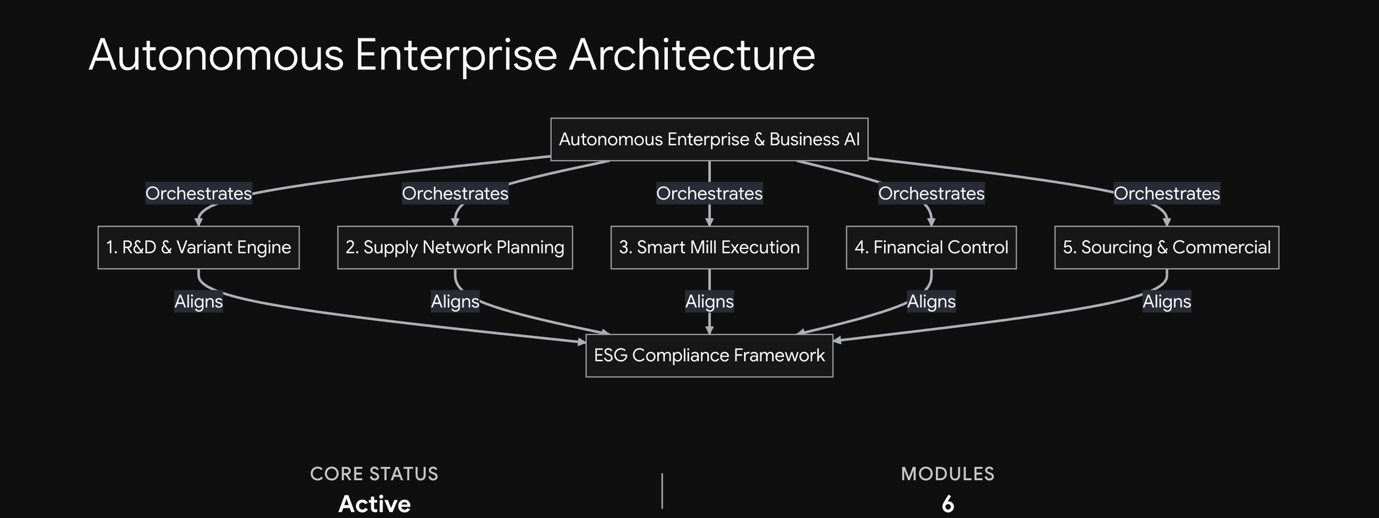
The diagram below illustrates how an AI-enabled Autonomous Enterprise core orchestrates dynamic data flows across key enterprise functions, replacing fragmented manual workflows with automated execution:

Transforming Business Functions into Self-Optimising Nodes

Here is how an Autonomous Enterprise digital transformation automates core operational processes across the mill value chain:

1. Product Engineering & R&D: Automated Attribute Configuration

Handling complex dimensions, tolerances, and physical characteristics often creates master data bottlenecks and human error.

  • Dynamic Variant Configuration: Master models automatically compute bills of materials (BOMs) and routing steps based on customer order parameters, eliminating manual master data creation.
  • Closed-Loop Feedback: Real-time production yields and quality tolerances automatically feed back into engineering models to continuously refine shop-floor specifications.

2. Supply Network & Logistics: Autonomous Demand-Driven Planning

Supply chain volatility in mill manufacturing requires continuous, real-time adjustments across transportation and yard networks.

  • Predictive Inventory Balancing: Integrated Business Planning (IBP) leverages machine learning algorithms to balance raw material inventories (pulp, scrap, coils) against dynamic demand signals.
  • Automated Yard & Logistics Management: Extended Warehouse Management (EWM) and Transportation Management (TM) automate shipping scheduling, yard movements, and multi-modal freight cost settlements.
  • Intelligent Order Promising (aATP): Real-time evaluations of capacity and work-in-progress (WIP) stock provide precise, automated delivery dates during order entry.

3. Smart Manufacturing & Asset Management: Self-Optimising Operations

Maximising Overall Equipment Effectiveness (OEE) while minimising scrap requires an intelligent shop floor.

  • Automated Trim & Cut Optimisation: The Autonomous Enterprise automatically aggregates multiple production orders into optimized cutting patterns and slitting schedules, drastically reducing scrap rates.
  • Predictive Asset Health Monitoring: IoT integrations evaluate machine vibrations and temperature sensors, automatically triggering maintenance orders and adjusting shop-floor schedules before downtime occurs.
  • End-to-End Batch Traceability: Continuous tracking captures batch lineage across all stages from melting and rolling to slitting ensuring full forward and backward quality compliance without manual logging.

4. Financial Controlling: Continuous Close & Real-Time Margins

Volatile commodity prices demand instant financial insights rather than delayed month-end reporting.

  • Single Source of Truth (Universal Journal): Financial Accounting (FI) and Controlling (CO) merge into a single ledger, eliminating manual reconciliations and enabling continuous financial processing.
  • Automated Batch-Level Costing: System logic dynamically factors in scrap recovery, energy usage, and co-product credits to deliver accurate, real-time profitability per batch or coil.
  • Exception-Based Governance: AI agents surface cost variance anomalies automatically, letting finance teams focus on strategic interventions rather than manual audit trails.

5. Commercial & Procurement Operations: Frictionless Execution

Connecting commercial strategies directly to raw material procurement ensures continuous margin protection.

  • Automated CPQ-to-Cash: Automated pricing engines factor in base metal surcharges, non-ferrous processing fees, and volume adjustments in real time during the quote lifecycle.
  • Intelligent Spend Analytics: Automated supplier workflows manage contract compliance, raw material procurement, and vendor risk profiles dynamically.

6. Sustainability & ESG: Automated Carbon Accounting

Regulatory mandates require enterprise-wide visibility into environmental impact.

  • Automated Product Carbon Footprints (PCF): Sustainability Footprint Management automatically tracks emissions across every processing stage, from raw material arrival to final shipment.
  • Integrated EHS Compliance: Operational safety protocols and environmental thresholds are embedded directly into daily asset maintenance and manufacturing workflows.

Partnering for the Autonomous Future

Achieving an Autonomous Enterprise is not just about adopting modern software; it is about re-engineering process flows to eliminate operational friction. By combining deep domain expertise in the Mill Products sector with cutting-edge capabilities, implementation partners help industrial manufacturers build resilient, self-optimizing operations.

The AAKIT Advantage: Architecting Your Autonomous Future

Building an Autonomous Enterprise requires more than technology it demands deep domain mastery of mill production cycles, unit-of-measure complexities, and shop-floor integrations.

As a trusted SAP Cloud ERP transformation partner, AAKIT brings decades of industry-specific implementation expertise to help metals, paper, packaging, and industrial manufacturers unlock peak operational efficiency. From AI-driven supply chain planning and dynamic trim optimisation to real-time batch costing, we bridge the gap between enterprise strategy and shop-floor execution.

Ready to eliminate operational friction and future-proof your mill operations?

Explore our specialised SAP solutions and industry frameworks at www.aakit.com or connect with our team to start your digital transformation journey.

Explore our specialised SAP solutions and industry frameworks at www.aakit.com or connect with our team to start your digital transformation journey.

Moving Beyond “Fulfillment”: Why Wholesale Distributors Must Transition to Autonomous Operations.

In the wholesale distribution sector, thin margins and volatile supply chains are no longer news they are the baseline.

For years, the industry’s primary objective was execution: Deliver what the customer needs, where they need it, and on time. But as supply networks become more complex and customer expectations shift toward hyper-personalised, instant service, manual execution and siloed systems have become severe bottlenecks.

To protect margins and unlock new revenue streams, leading distributors are shifting away from traditional operational models toward the Autonomous Enterprise

The Operational Bottleneck in Wholesale Distribution

When we consult with wholesale distribution leaders, we routinely see five friction points that limit scale:

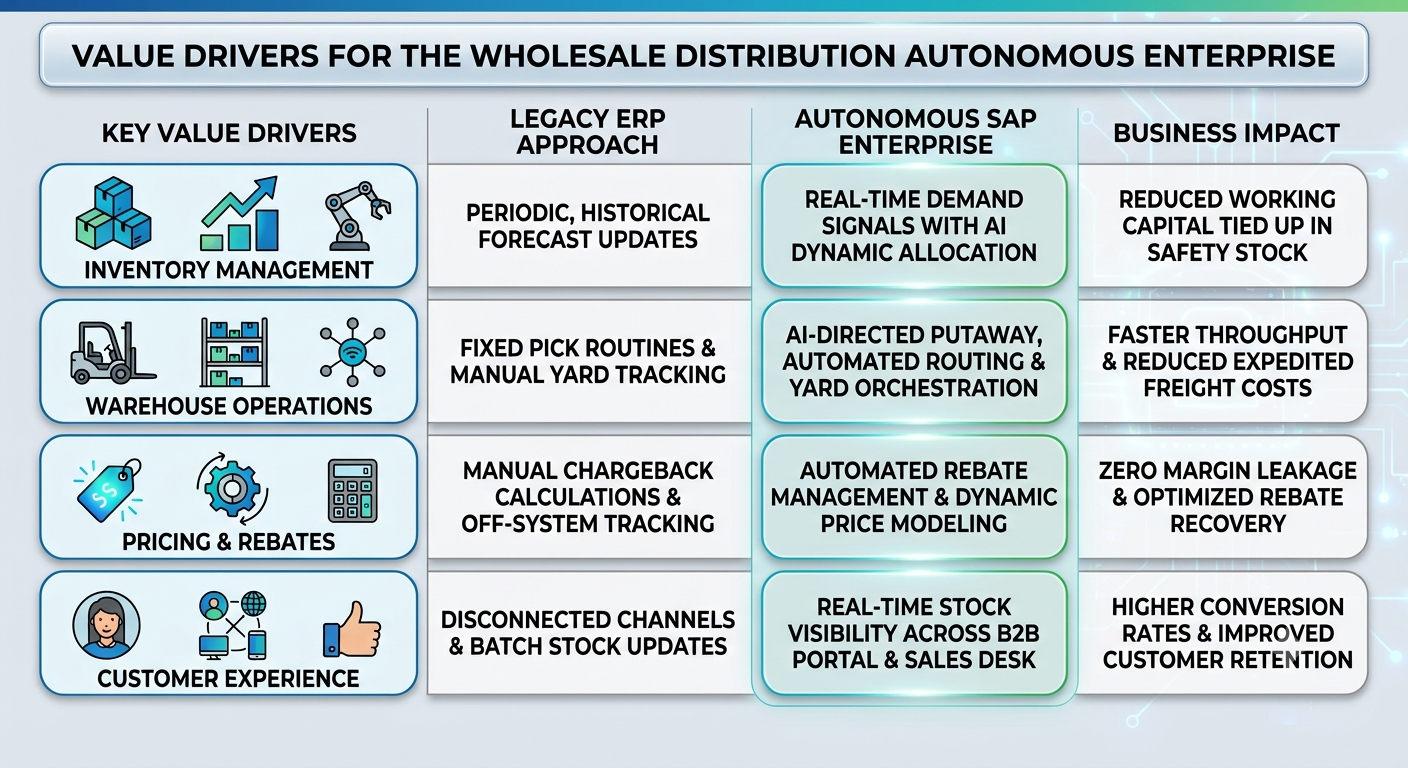
  • Inventory & Cash Flow Mismatches: Surpluses in slow-moving SKUs paired with frequent stock-outs in high-demand items due to reactive demand forecasting.
  • Margin Leakage: Inability to dynamically adjust pricing to reflect real-time cost fluctuations, chargeback complexities, and supplier rebate structures.
  • Logistics & Warehouse Friction: High-volume operations constrained by manual dispatching, yard bottlenecks, and disconnected transportation modes.
  • Omnichannel Disconnect: E-commerce channels running out of sync with real-time warehouse inventory and customer-specific contract pricing.
  • Operational Overload: Back-office teams spending hours on manual invoice reconciliation, bad debt follow-ups, and chargeback processing instead of strategic vendor management.

The Autonomous Enterprise Architecture

An Autonomous Enterprise isn’t about replacing human teams; it’s about deploying intelligent automation and agentic AI across core business processes so operations self-correct in real time.

Leveraging SAP’s industry-tailored suite, an autonomous ecosystem operates through four integrated pillars:

  1. Dynamic Demand Planning & Supply Resiliency

  • SAP IBP & Advanced ATP: Unify finance, logistics, and dynamic material planning. Autonomous workflows detect demand spikes or supply chain disruptions early, adjusting safety stock allocations and re-routing orders to prevent stock-outs before they impact the P&L.
  1. Self-Optimizing Warehouse & Yard Operations

  • SAP Extended Warehouse Management (EWM) & Transportation Management (TM): Move from reactive scheduling to directed put away, automated yard management, and real-time shipment track-and-trace. AI agents optimize pick paths and labor allocation dynamically based on order volume velocity.
  1. Real-Time Pricing & Margin Protection

  • SAP Commerce Cloud + Partner Extensions (Pricefx / Vistex): Eliminate profit leakage by harmonizing customer-specific contract pricing, rebates, and chargebacks in real time. Sales teams gain instant visibility into true product margin during complex CPQ (Configure, Price, Quote) workflows.
  1. Frictionless Back-Office Orchestration

  • SAP S/4HANA Finance & Business AI: Automate invoice processing, cash application, and supplier cost recoveries. Autonomous finance agents systematically flag margin anomalies and reduce Days Sales Outstanding (DSO).

How We Drive the Journey

As an SAP Implementation Partner specializing in Autonomous Enterprise enablement, we guide wholesale distributors through a structured, value-driven roadmap:

  1. Process Intelligence & Value Scoping: We analyze your existing process flows using SAP Signavio to locate margin leakage, high DSO nodes, and operational friction.
  2. Clean Core & Cloud ERP Foundation: Implementing SAP S/4HANA Cloud (GROW/RISE) to establish a standardized platform that accepts AI capabilities without technical debt.
  3. Agentic AI & Orchestration Deployment: Embedding AI agents and specialized industry partner solutions (such as Vistex for chargebacks or Pricefx for dynamic pricing) into your core workflows.
  4. Continuous Autonomous Optimization: Setting up real-time monitoring to continuously train models, refine warehouse automation, and optimize supplier collaboration via SAP Business Network.

The Next Steps for Wholesale Leaders

The transition to an autonomous architecture is no longer a multi-year speculative project—it is an incremental strategy that yields immediate operational efficiency.

Partnering for Success: Why AAKIT Technologies?

Transitioning from traditional execution to an Autonomous SAP Enterprise requires more than standard software setup it demands deep industry domain expertise and a practical implementation approach.

With over three decades of experience implementing enterprise solutions and a proven track record across global SAP rollouts, AAKIT Technologies bridges strategic executive vision with operational reality. By leveraging SAP S/4HANA Cloud, SAP BTP, and Joule AI under a clean-core framework, we help wholesale distributors eliminate margin leakage, accelerate order velocity, and build self-correcting operations.

Ready to modernize your distribution model? Explore how we help enterprises scale at www.aakit.com or reach out directly to start your SAP transformation journey today.
Are you evaluating how to integrate Business AI and autonomous workflows into your SAP S/4HANA roadmap? Let’s connect or drop a comment below to discuss your current operational bottlenecks.

Agribusiness Doesn’t Need More Dashboards. It Needs a Business That Acts on Its Own Data.

Every season, agribusiness leaders place bets they only partly control: rainfall, input costs, commodity prices, grower loyalty, and now the traceability and sustainability evidence that buyers and regulators expect. Over the last decade, most of the industry invested in visibility. Better reports, more dashboards, more data lakes.

But visibility doesn’t harvest anything. Someone still has to notice the problem, find the right data, and act, usually in a spreadsheet at 11 pm. That is the gap SAP is now going after, and it’s why, as an implementation partner focused on SAP’s Autonomous Enterprise, we believe agribusiness is one of the most compelling places to apply it.

What AAKIT brings to agribusiness

AAKIT’s one goal is to help companies build food supply chains that are transparent, resilient and sustainable. The outcomes it targets will be familiar to anyone in this sector. They include protecting soil health and biodiversity, supporting growers to lift yield and quality, moving to more sustainable sourcing, and running farm operations as cost-effectively as possible.

The goal rests on four pillars:

  • Ready-to-run cloud ERP: bringing intelligent agriculture practices into the core to improve resiliency, efficiency and sustainability
  • Sustainable farming: using data to record, report and act on sustainability goals at scale
  • Efficient agriculture: data-driven operations and optimised plan-to-harvest processes
  • Digitalised farming: digitising farming processes and services so decisions are better informed

These pillars span the full value chain. They cover farm production with consistent agricultural data across the enterprise, commodity and food processing with process control that protects product integrity, and marketing and sales with personalised engagement for farmers and customers. Underneath all of it sits the SAP Business Suite, which brings together cloud ERP applications, SAP Business AI and SAP Business Data Cloud.

Why "autonomous" changes the conversation

At SAP Sapphire in May, SAP went a step further. It introduced the Autonomous Enterprise, a model in which people and AI work together on the most critical business workflows. Two components matter most:

  • SAP Business AI Platform, which unifies SAP BTP, SAP Business Data Cloud and SAP Business AI
  • SAP Autonomous Suite, which deploys more than 50 domain-specific Joule Assistants and over 200 specialised agents that execute workflows directly rather than only surfacing recommendations

The key point is that SAP describes this as governed agents orchestrating end-to-end processes across SAP and non-SAP systems, with humans in the loop by design.

What this could look like in agribusiness

These are the agentic patterns we believe will deliver value first:

  • Grower intake agent. It monitors deliveries against contracted volumes and flags shortfalls early. It then proposes reallocation before a plant runs short.
  • Traceability and quality agent. It links a failed lab result to lots, fields and growers within minutes. It then prepares the hold or recall scope for a quality manager to approve.
  • Sustainability reporting agent. It assembles field-level practice data into buyer-ready and regulator-ready disclosures, instead of a quarterly scramble.
  • Grower advisory agent. It builds on what SAP describes as personalised, data-driven farming advice from SAP Business AI to improve forecasts and maximise yields.
  • Grower settlement agent. It reconciles advances, input deductions, quality grades and final payments, and routes exceptions to a person.

Many of these can be built and orchestrated with Joule Studio, SAP’s environment for building enterprise agents and orchestrated workflows.

What we tell clients before they start

From the partner side, these five lessons matter more than any demo:

  1. Agents are only as good as your master data. If farm, field, plot, grower, crop and lot aren’t modelled consistently, no agent will fix that. Data harmonisation is the unglamorous first mile.
  2. Clean core first. Heavily customised ERP makes it hard for agents to reason over your processes. Every custom workaround you retire makes autonomy easier.
  3. Start where the pain is measurable. Grower payments, intake planning and traceability have clear baselines, so you can prove ROI in one season.
  4. Keep humans in the loop where livelihoods are involved. Decisions that affect farmer payments or food safety need approval steps, and SAP’s governance model supports that.
  5. Be realistic about maturity. Analysts have noted that early GA dates reflect demo-ready capability rather than full enterprise readiness at scale. Pilot, measure, then expand. The timing is favourable: SAP has made the Joule agent runtime free through December 31, 2026, so this quarter is a low-cost window to prove a use case.

The India lens

For agribusinesses in India, the case is especially strong. Companies here often source from thousands of smallholders and FPOs, manage advances and settlements at high volume, and face tightening traceability expectations from export buyers.

Grower engagement, settlement accuracy and farm-to-shipment traceability are exactly the processes where a governed, agent-driven model can remove days of manual effort. They also build trust with growers.

A practical 90-day starting point

  • Weeks 1–3, value discovery: pick one or two high-pain processes and baseline them.
  • Weeks 4–8, data foundation: harmonise grower, field and lot master data and connect it to SAP Business Data Cloud.
  • Weeks 9–12, first agent live: one production agent with human approval steps and measured outcomes.

Partnering for Success: Why AAKIT Technologies?

Transitioning from traditional execution to an Autonomous SAP Enterprise requires more than standard software setup it demands deep industry domain expertise and a practical implementation approach.

With over three decades of experience implementing enterprise solutions and a proven track record across global SAP rollouts, AAKIT Technologies bridges strategic executive vision with operational reality. By leveraging SAP Autonomous Cloud, SAP BTP, and Joule AI under a clean-core framework, we help agribusinesses eliminate margin leakage, accelerate order velocity, and build self-correcting operations.

Ready to modernise your distribution model? Explore how we help enterprises scale at www.aakit.com or reach out directly to start your SAP transformation journey today.

Are you evaluating how to integrate Business AI and autonomous workflows into your SAP Autonomous Cloud roadmap? Let’s connect or drop a comment below to discuss your current operational bottlenecks.

The bottom line

“Autonomous” doesn’t mean fewer people on the farm or in the plant. It means your agronomists, procurement teams and quality managers spend their time with growers and on decisions, not reconciling data. The technology is ready to start. The differentiator now is the foundation you build beneath it.

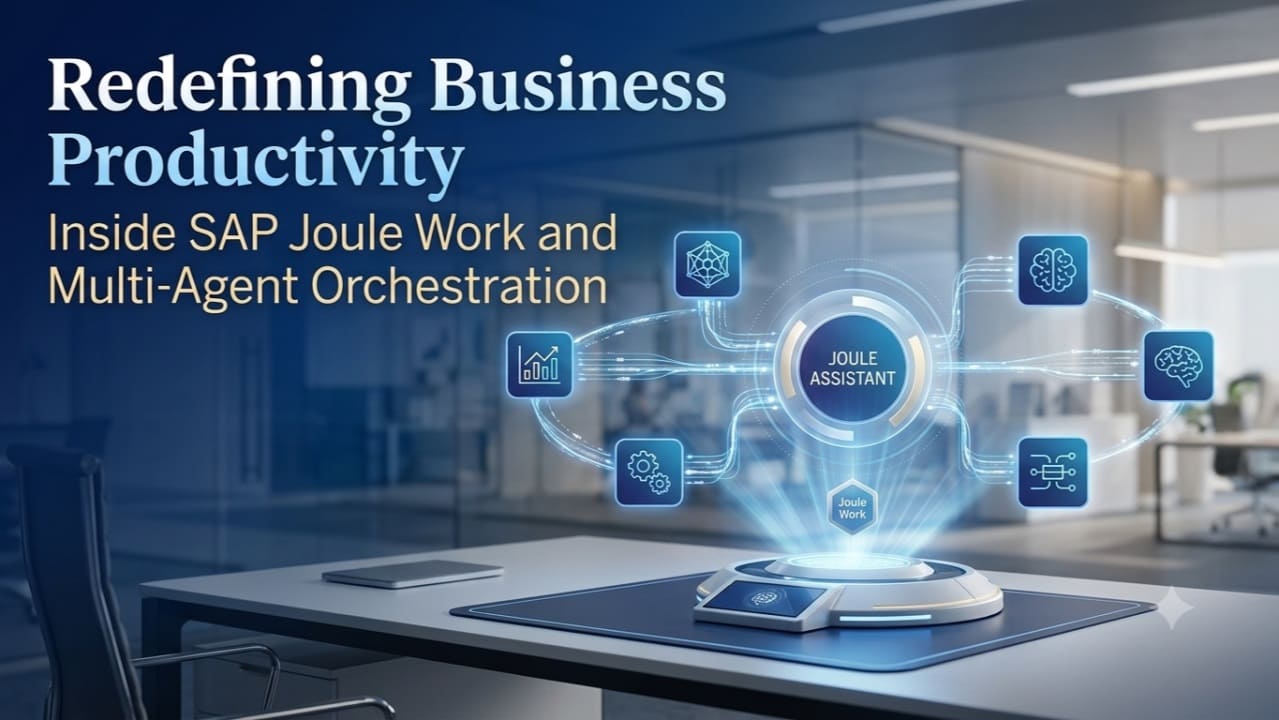
Redefining Business Productivity: Inside SAP Joule Work and Multi-Agent Orchestration.

Organizations often struggle with fragmented workflows, system-switching fatigue, and manual handoffs that delay execution. SAP Joule Work addresses these challenges by transforming raw business intent into coordinated enterprise action. By uniting data, applications, and specialized AI agents into a single workspace, Joule Work transitions enterprise operations from reactive task management to autonomous execution.

Understanding the Core Concepts

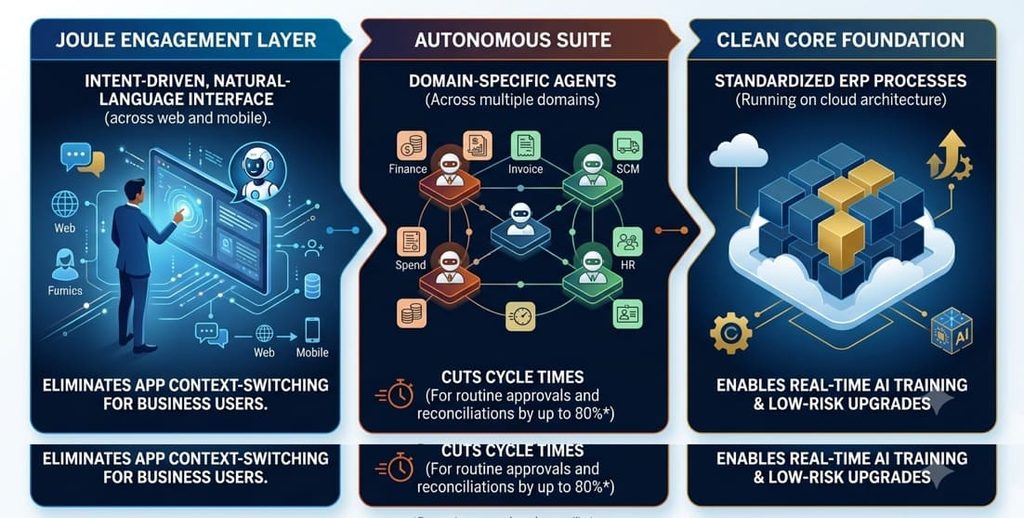
  • Joule Work: A unified workspace combining data, enterprise applications, and agent workflows. It eliminates system switching by letting users state their goals in natural language while AI surface insights and automate background tasks.
  • Multi-Agent Systems: Collaborative networks of AI agents designed to break down complex enterprise problems into coordinated sub-tasks, dramatically accelerating end-to-end decision-making.

 How Joule Assistants and Agents Collaborate

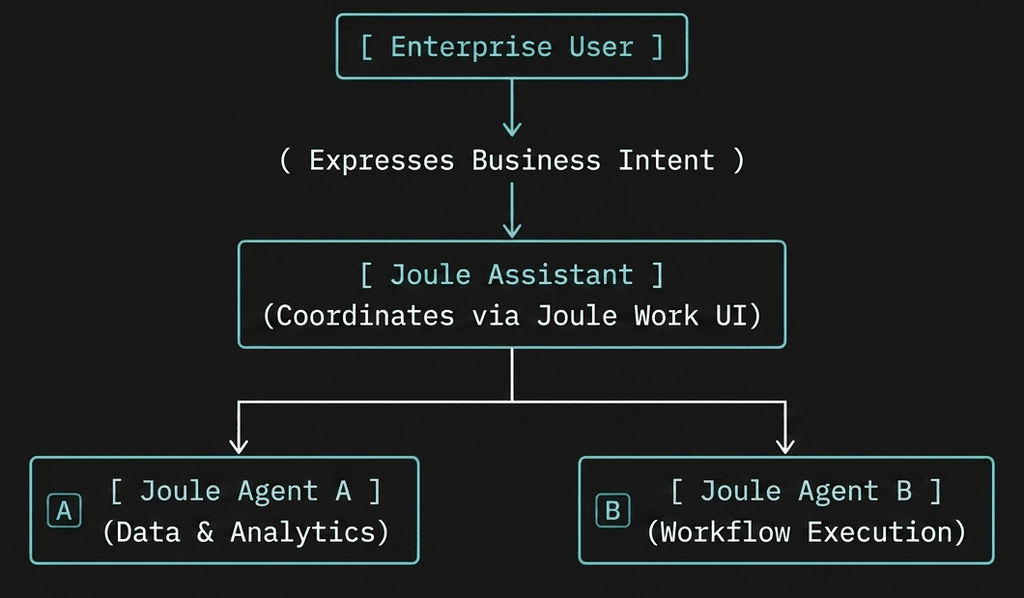
The architecture relies on a seamless dynamic between central coordination and specialized execution:

  1. Joule Assistants: Operating directly within Joule Work, assistants leverage deep business context and role awareness to orchestrate overall tasks.
  1. Joule Agents: Directed by the assistant, specialized agents trigger actions, connect relevant tools and data sources, interact with underlying software, and execute multi-step workflows in sequence or parallel.

Driving Autonomy and Efficiency Across Teams

Joule Work modernizes team productivity by preventing operational bottlenecks:

  • Eliminating Inbox Delays: Cross-functional tasks move instantly from insight to execution rather than waiting in manual approval queues or email threads.
  • Real-Time Adaptation: Autonomous workflows continuously adjust across underlying systems based on shifting business inputs and live data updates.
  • Intent-Driven Operations: Teams focus on high-impact strategic decisions while agents handle routine, system-heavy mechanics.

Governance, Security, and Responsible AI

 Enabling autonomous agent networks requires strict enterprise safeguards. Joule Work serves strictly as the interactive engagement layer, while security and compliance are governed by the underlying SAP Business AI Platform:

  • Role-Based Access & Data Permissions: Agents operate strictly within the user’s explicit authorization levels and pre-configured data security boundaries.
  • Audibility & Oversight: Detailed activity monitoring provides full transparency, ensuring human-in-the-loop controls remain active wherever required.

The AAKIT Advantage

As an SAP AI implementation partner, we at AAKIT play the role in bridging the gap between out-of-the-box SAP Joule AI capabilities and an organization’s specific business context. Beyond basic technical enablement, an AAKIT evaluates end-to-end workflows to identify high-value use cases for agentic automation, configures multi-agent orchestrations within Joule Work, and tailors low-code or pro-code custom agents via Joule Studio to connect both SAP and non-SAP enterprise systems.

Crucially, we ensure robust governance by configuring role-based access, data permissions, and security parameters within the SAP Autonomous AI Platform, ensuring autonomous agents operate safely, accurately, and within regulatory compliance. By combining domain expertise with technical architecture and organizational change management, AAKIT accelerates time-to-value, helping teams transition smoothly from manual system operations to an intent-driven, autonomous way of working.

By combining multi-agent orchestration with enterprise-grade governance, SAP Joule Work turns complex enterprise processes into frictionless, real-time outcomes.

Is Your Enterprise Ready for Agentic AI? How SAP Joule is Redefining the Autonomous Enterprise

Most CXOs we speak with agree on one thing: Generative AI chatbots that simply summarise text or answer basic queries are no longer enough. To achieve true operational resilience and scale, enterprise systems must move from passive record-keeping to active, autonomous execution.

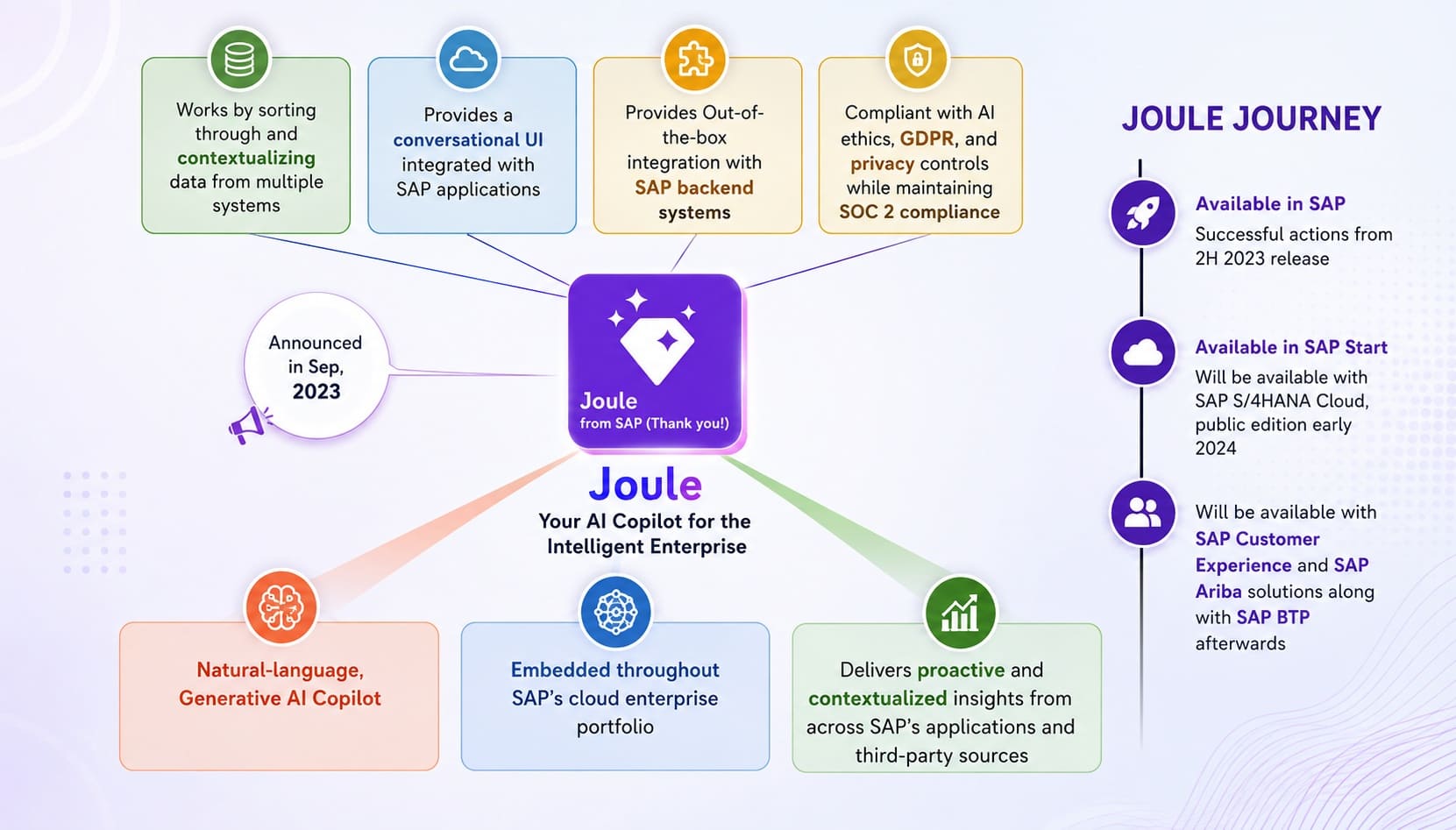
Enter SAP Autonomous Enterprise and Joule—SAP’s generative AI copilot and agentic orchestrator built directly into the core of SAP S/4HANA Cloud, BTP, and other solutions. Instead of treating AI as an isolated add-on, SAP’s Autonomous Suite embeds AI agents into daily business workflows.

What Does the Shift to an “Autonomous Enterprise” Look Like?

When organisations transition from legacy ERP setups to an AI-first, clean-core SAP deployment, the operational shift is immediate:

  • From Reactive to Proactive: Rather than waiting for human inputs to flag supply chain disruptions or invoice mismatches, Joule’s autonomous agents detect anomalies, simulate alternative scenarios, and execute resolutions.
  • Context-Aware Decisions: Powered by the SAP Business Data Cloud and semantic knowledge graphs, Joule understands enterprise governance rules, user permissions, and process workflows.
  • Multi-Agent Orchestration: Specialized agents collaborate across Finance, Procurement, HCM, and CX—handling routine tasks like cash reconciliations, automated dispute resolution, and vendor management.

 Key Pillars of the SAP Business AI Architecture

Why Implementation Architecture Matters.

AI agents are only as reliable as the data and process foundation supporting them. To safely grant AI agents the authority to execute transactions, enterprises need:

  • A Clean Core: Stripping out legacy, non-standard custom code to ensure full upgradeability and agent compatibility.
  • Robust Data Governance: Ensuring master data across S/4HANA and external systems is unified and compliant.
  • Guardrails & Human-in-the-Loop Control: Setting clear thresholds where AI agents execute autonomously versus escalating complex exceptions to human decision-makers.

As implementation partners, our role is to help enterprises evaluate their RISE/GROW migration readiness, identify high-value AI agent use cases, and implement a secure roadmap to the autonomous enterprise. 👉 Explore AAKIT’s Expertise with SAP Solutions.

Beyond the Hype: How the Autonomous Enterprise Is Redefining the Future of Work

For the past few years, enterprise AI adoption has largely cantered on single-point solutions: AI chatbots for drafting emails, localized copilot tools, or basic rule-based automation. While these tools offer marginal productivity boosts, they fail to solve a fundamental operational challenge—fragmented, slow, and reactive business processes.

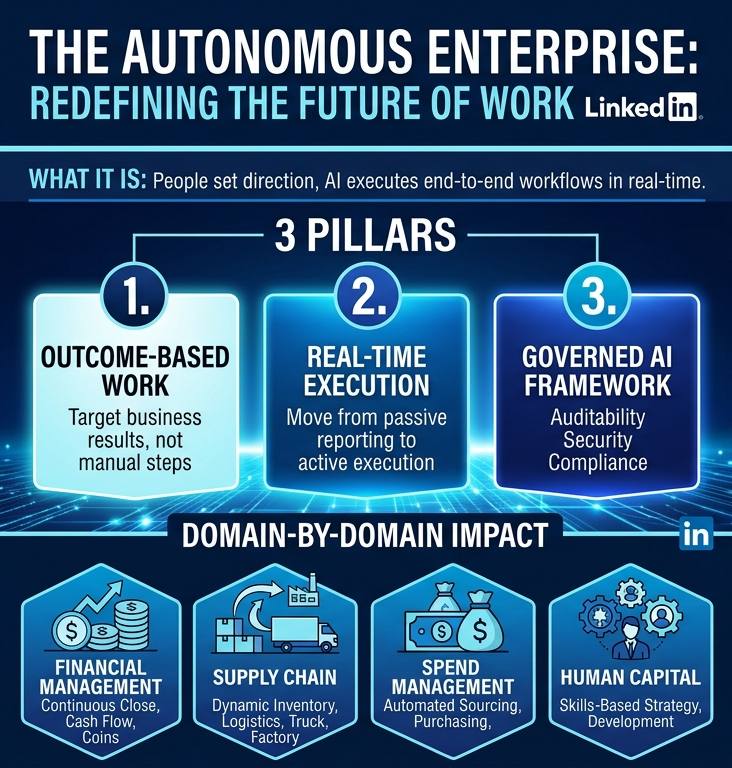
The next evolution of digital transformation moves beyond simple task assistance to The Autonomous Enterprise: an operational model where AI native systems execute end-to-end workflows in real time, enabling human teams to step up the value chain from process execution to strategic governance.

The Core Problem: The Limits of Traditional ERP & Point AI

In traditional enterprise environments, decision-making is inherently lagging:

  • Data Silos: Information is scattered across ERPs, HR tools, CRM, and supply chain systems.
  • Manual Handoffs: Processes stall at every cross-departmental boundary (e.g., Procurement waiting on Finance approval, who is waiting on Supply Chain data).
  • Reactive Operations: Systems focus on reporting what happened in the past rather than executing what needs to happen next.

The Autonomous Enterprise addresses this by shifting the operational centre of gravity: People set direction and parameters; AI continuously executes and refines operations.

The 3 Structural Pillars of Autonomous Operations

1. Shift from Process Execution to Outcome Management

Instead of requiring employees to navigate complex menus, fill out multi-screen forms, or track down status updates, work begins with an intended outcome. AI handles routine transactional execution, surfacing only high-stakes decisions that require human judgment.

2. Execution Grounded in Real-Time Business Context

Static dashboards tell you what broke yesterday. Autonomous systems leverage deep domain logic, unified data structures, and real-time context to identify bottlenecks, re-route supply chains, or process financial closes continuously as transactions occur.

3. Enterprise-Grade Governance & Auditability

Autonomy does not mean a lack of control. Every AI action, recommendation, and automated transaction runs on a governed foundation—ensuring strict compliance, role-based access control, and complete audit trails across both cloud and legacy architectures.

The Mechanics: AI Assistants vs. AI Agents

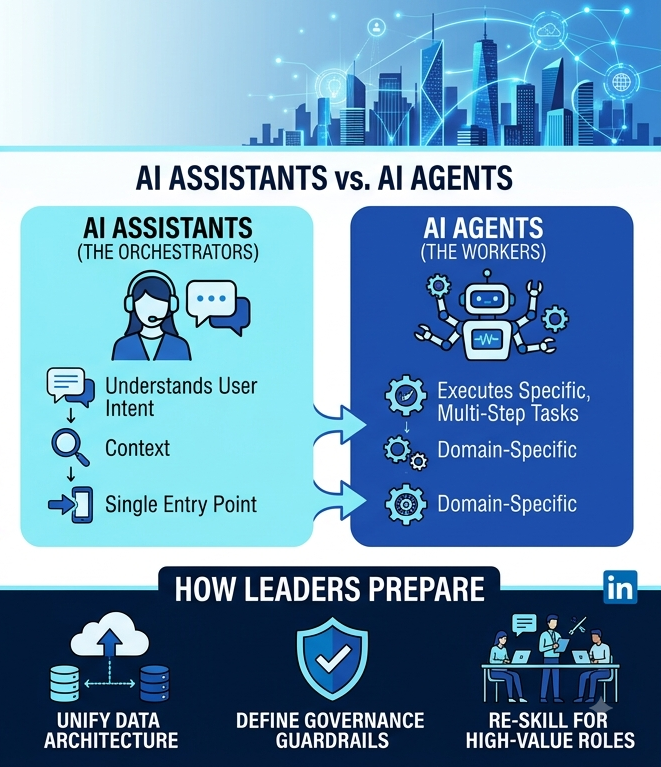
Understanding the mechanics of autonomous systems requires distinguishing between Assistants and Agents:

How does autonomous execution transform core enterprise business units?

1. Financial Management

  • Continuous Close: Replaces stressful end-of-month financial closes with continuous reconciliation and real-time ledger updates.
  • Autonomous Treasury & Compliance: AI monitors cash flow patterns and flags compliance deviations before transactions are settled.

2. Supply Chain & Manufacturing

  • Dynamic Inventory Replenishment: Material planning shifts from static re-order points to predictive, autonomous execution based on demand signals and supplier health.
  • Resilience at Scale: When disruptions occur, AI agents immediately calculate alternate logistics routes and re-balance inventory across distribution centres.

 3. Spend Management & Procurement

  • Automated Sourcing: AI continuously analyzes supplier market data, contract terms, and compliance records to optimize purchasing decisions.
  • Streamlined Invoice & Payment Matching: Multi-way matching happens instantly, routing only true anomalies to procurement specialists.

 4. Human Capital Management (HCM)

  • Skills-Based Talent Strategy: AI continuously maps workforce skills against emerging market demands, suggesting internal mobility pathways and personalized development programs.
  • Self-Service HR Orchestration: Routine employee lifecycle changes (onboarding, benefits adjustments) are automated without administrative overhead.

 How Leaders Should Prepare for the Autonomous Shift

  1. Unify Your Data Architecture: Autonomous AI is only as good as the contextual data feeding it. Prioritize harmonizing enterprise data models.
  2. Define Governance Guardrails First: Determine clear thresholds for where AI can act autonomously versus where human-in-the-loop validation is strictly mandatory.
  3. Re-skill for High-Value Roles: Shift team focus away from transactional processing toward strategic analysis, vendor relationships, and AI system oversight.

What’s Your Enterprise AI Strategy?

As business architectures evolve, where is your organization seeing the most friction—and where could autonomous operations make the biggest impact?

For The Companies Who Are Looking To Implement SAP Cloud ERP & How You Can Leverage AAKIT In Your Expansion Plans.

Transitioning to SAP Cloud ERP specifically SAP S/4HANA Cloud is a high-stakes move. To do it right, you need more than a software vendor; you need a strategic partner who understands the “tribal knowledge” of your industry. As a specialised SAP CLOUD Implementation Partner, we at AAKIT bridge the gap between complex software and real-world business results. Here is a deeper dive into the strategic pillars of implementation and how AAKIT specifically accelerates your ROI.

The "Blueprint for Speed": Industry-Specific Templates

The biggest mistake companies make is starting with a “blank sheet of paper.” This leads to endless meetings and “scope creep.”

  • The Advice: Instead of building from scratch, use a Pre-Configured Industry Solution. This allows you to adopt 80% of your processes instantly, focusing your creative energy only on the 20% that gives you a competitive advantage.
  • How AAKIT Helps: AAKIT brings pre-configured industry templates (for manufacturing, professional services, chemicals, etc.). We don’t ask, “How do you want to do procurement?” instead, we say, “Here is the best-practice procurement process for your industry; let’s see if we need to tweak it.” This reduces implementation time by 30–40%.

Architecting the "Global Golden Template"

Expansion fails when every branch office operates like a rogue state. You need a “Single Version of the Truth.”
  • The Advice: Design a “Golden Template”—a core set of configurations (COA, global procurement, master data) that is non-negotiable across the company.
  • How AAKIT Helps: AAKIT specialises in Global Rollouts. We help you design this central core while allowing for “Local Flavours.” For example, if you expand into the Middle East or SE Asia, AAKIT ensures your Golden Template remains intact while plugging in the specific tax and localised legal requirements (localisation) of those regions seamlessly.

Moving from "Data Entry" to "Autonomous Operations"

If your team is still manually entering invoices or reconciling bank statements in a Cloud ERP, you’re using a Ferrari to go to the grocery store.

  • The Advice: Leverage Embedded AI and Robotic Process Automation (RPA). Your expansion should not require a linear increase in back-office headcount.
  • How AAKIT Helps: AAKIT identifies high-impact automation use cases. We help you deploy SAP Build Process Automation so that your system “learns” to handle exceptions, allowing your finance and ops teams to focus on strategy and expansion analysis rather than data entry.

The "Clean Core" for Perpetual Innovation

The Cloud is not a one-time event; it’s a subscription to innovation. SAP releases major updates regularly.

  • The Advice: Keep your Core Clean. Avoid modifying the standard code. Use the SAP Business Technology Platform (BTP) for any “extra” features you need.
  • How AAKIT Helps: Our technical architects ensure that any custom apps or integrations you need are built outside the ERP core on SAP BTP. This ensures that when SAP releases a new AI feature or a carbon-tracking module, your system is ready to receive it without a massive “re-implementation” project.

The "Shadow IT" Audit

Before AAKIT starts the technical work, We ask our client to perform a “Shadow IT Audit.” Identify all the Excel sheets and third-party apps your team is using to “get around” your current system. By bringing these into the SAP Cloud environment, you eliminate data silos and give your leadership a real-time view of the entire enterprise.

Turning Complexity into a Competitive Advantage

Implementing SAP Cloud ERP is not merely a technical migration; it is a declaration of intent. It signals that your organization is ready to shed the weight of legacy processes and embrace a future defined by agility, scalability, and intelligence.

The journey to a “Clean Core” and a “Global Template” can feel daunting, but the rewards are transformative. By shifting from a culture of customization to one of standardization, you unlock the ability to pivot faster than your competitors. Whether you are entering a new geographical market or integrating a fresh acquisition, a cloud-based foundation ensures that your digital infrastructure is an accelerator, not a bottleneck.

The AAKIT Difference

In this high-stakes transition, the right partner is the ultimate force multiplier. AAKIT brings the precision of an experienced surgeon to the implementation process—minimizing risk, accelerating timelines with industry-specific accelerators, and ensuring that your team is empowered to lead. With AAKIT’s guidance, SAP S/4HANA Cloud stops being a “cost center” and starts being a System of Intelligence that fuels your global expansion.

Thought for Leadership

“Success in the cloud is 20% about the software and 80% about the vision. Don’t just build a system that records what happened yesterday; build a platform that enables what you want to achieve tomorrow.”

Future-Proofing Your Growth: Why 2026 Will Reward the “Cloud-First” Organisation

As we move further into 2026, the global business landscape has reached a definitive tipping point. The debate over whether to migrate to the cloud is officially over; the conversation has shifted to speed, agility, and the “Autonomous Enterprise.”

In 2026, competitive advantage is no longer defined by the size of your balance sheet or the scale of your physical assets. It is defined by the velocity of your data-to-decision cycle.

Here is why 2026 is rewarding the “Cloud-First” organisation and how AAKIT Technologies is a leverage this momentum to dominate your industry.

The Rise of Hyper - Verticalisation

For years, ERP systems were criticised for being “one size fits all.” In 2026, that narrative has vanished. SAP’s focus on Industry Cloud has reached maturity, offering deeply specialised functionality for sectors ranging from High-Tech manufacturing to complex Retail logistics.

  • The Advantage: Mid-market companies now have access to the same sophisticated, industry-specific “best practices” as global giants.
  • The Leverage: You no longer need to build custom code to handle your unique industry requirements. By using a cloud-native, verticalized solution, you can deploy in weeks and scale instantly.

Composable ERP: The Power of "Plug and Play"

We have entered the era of the Composable ERP. Gone are the days of the monolithic, rigid system. Today’s SAP Cloud environment allows businesses to “plug in” new capabilities such as advanced sustainability tracking or AI-driven demand forecasting without disrupting the core.

  • The Advantage: If a new market opportunity arises, you can integrate the necessary digital tools in days, not months.
  • The Leverage: This modularity allows your business to pivot its strategy in real-time, responding to supply chain shifts or consumer trends before your competitors even see them coming.

Real-Time Data as a Strategic Asset

In 2026, “Live Data” is the only data that matters. With SAP S/4HANA Cloud, the lag between a transaction and an insight has effectively been reduced to zero.

  • The Advantage: Decision-making has been decentralised. Managers on the shop floor or in the warehouse have access to the same high-level insights as the CFO.
  • The Leverage: Use this elasticity to manage volatility. Whether it’s fluctuating raw material costs or sudden spikes in demand, a cloud-first infrastructure allows you to adjust your resources dynamically.

Why the Right Partner is Your Greatest Security

Moving to the cloud is a strategic evolution, but the complexity of the “Clean Core” mandate requires a partner who understands the roadmap. This is where AAKIT Technologies excels. As a seasoned SAP Cloud ERP implementation partner, AAKIT doesn’t just “install” software. We architect growth.

AAKIT's approach focuses on:

  • Clean Core Methodology: Ensuring your implementation remains standard enough to receive weekly innovations from SAP, but powerful enough to run your unique business.
  • Business-Centric Implementation: We align the technology with your 2026 KPIs, ensuring that the cloud is a driver of ROI, not just an IT expense.
  • Scalability: We help you build a foundation that is ready for whatever 2027 and beyond might bring.

The Bottom Line

2026 is the year of the agile. If your ERP is still a “system of record” locked in a data centre, you are falling behind. If it is a “system of intelligence” in the cloud, the world is yours for the taking.

Is your organisation ready to lead in 2026?

Explore how we can accelerate your journey at www.aakit.com.