Is Your Enterprise Ready for Agentic AI? How SAP Joule is Redefining the Autonomous Enterprise

Most CXOs we speak with agree on one thing: Generative AI chatbots that simply summarise text or answer basic queries are no longer enough. To achieve true operational resilience and scale, enterprise systems must move from passive record-keeping to active, autonomous execution.

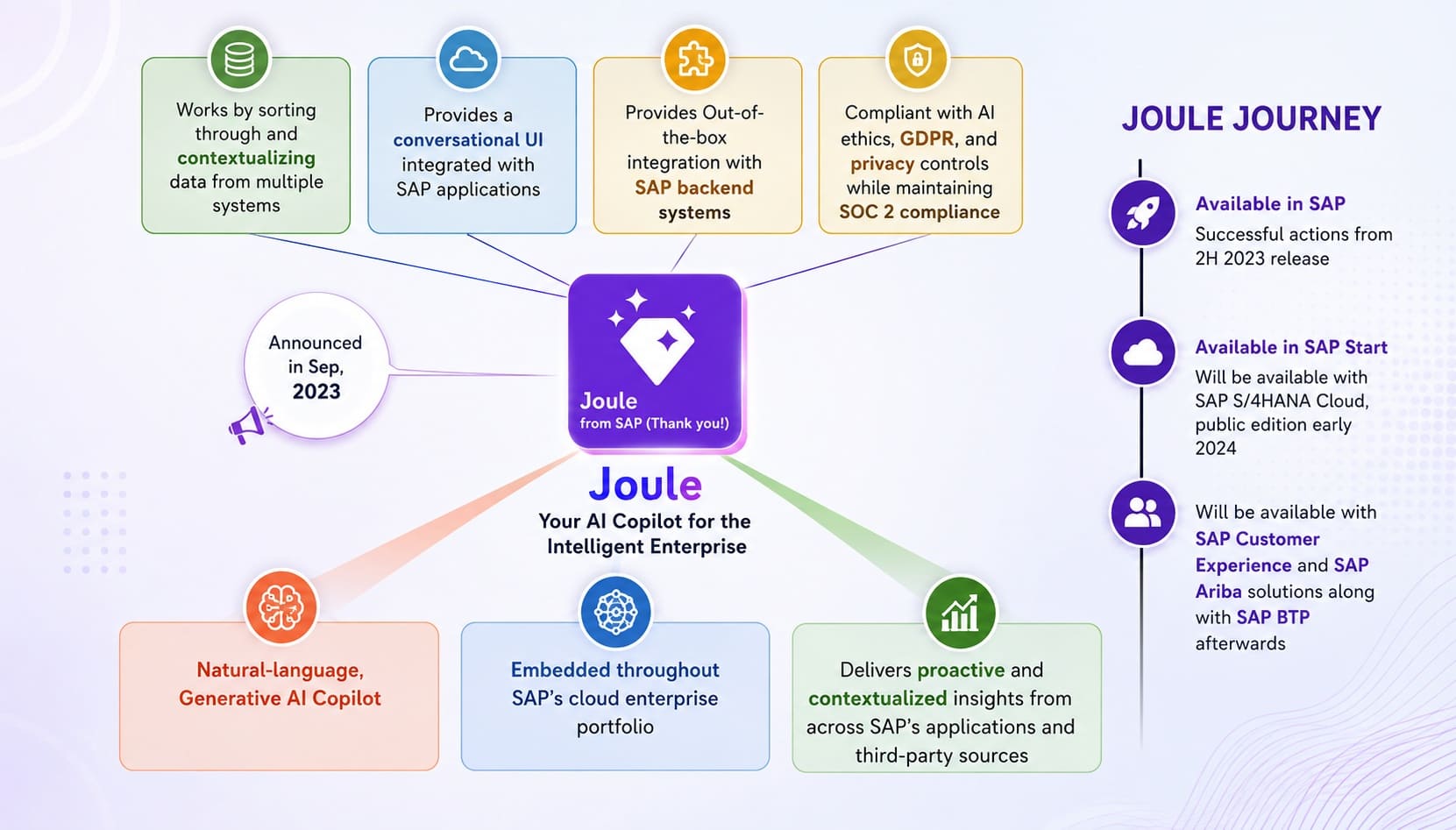
Enter SAP Autonomous Enterprise and Joule—SAP’s generative AI copilot and agentic orchestrator built directly into the core of SAP S/4HANA Cloud, BTP, and other solutions. Instead of treating AI as an isolated add-on, SAP’s Autonomous Suite embeds AI agents into daily business workflows.

What Does the Shift to an “Autonomous Enterprise” Look Like?

When organisations transition from legacy ERP setups to an AI-first, clean-core SAP deployment, the operational shift is immediate:

  • From Reactive to Proactive: Rather than waiting for human inputs to flag supply chain disruptions or invoice mismatches, Joule’s autonomous agents detect anomalies, simulate alternative scenarios, and execute resolutions.
  • Context-Aware Decisions: Powered by the SAP Business Data Cloud and semantic knowledge graphs, Joule understands enterprise governance rules, user permissions, and process workflows.
  • Multi-Agent Orchestration: Specialized agents collaborate across Finance, Procurement, HCM, and CX—handling routine tasks like cash reconciliations, automated dispute resolution, and vendor management.

 Key Pillars of the SAP Business AI Architecture
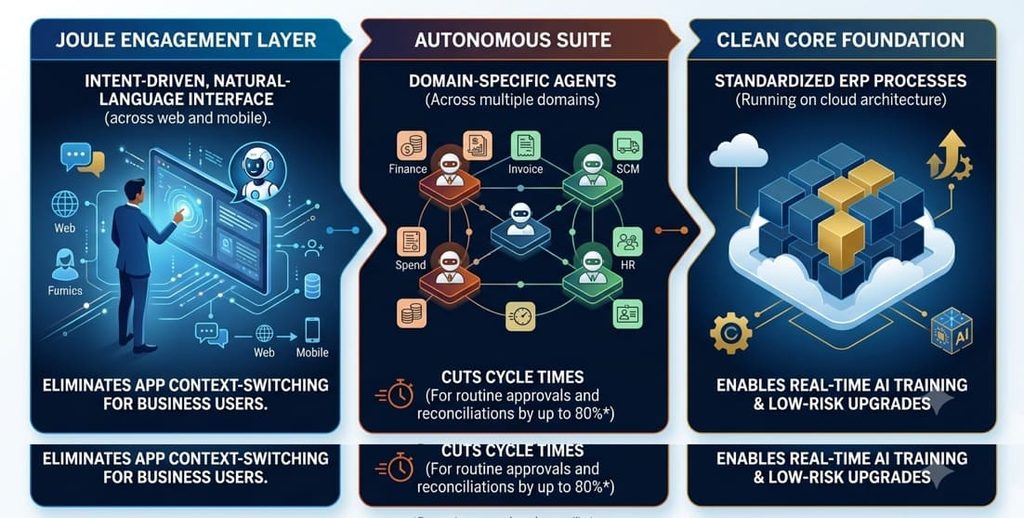
Why Implementation Architecture Matters.

AI agents are only as reliable as the data and process foundation supporting them. To safely grant AI agents the authority to execute transactions, enterprises need:

  • A Clean Core: Stripping out legacy, non-standard custom code to ensure full upgradeability and agent compatibility.
  • Robust Data Governance: Ensuring master data across S/4HANA and external systems is unified and compliant.
  • Guardrails & Human-in-the-Loop Control: Setting clear thresholds where AI agents execute autonomously versus escalating complex exceptions to human decision-makers.

As implementation partners, our role is to help enterprises evaluate their RISE/GROW migration readiness, identify high-value AI agent use cases, and implement a secure roadmap to the autonomous enterprise. 👉 Explore AAKIT’s Expertise with SAP Solutions.
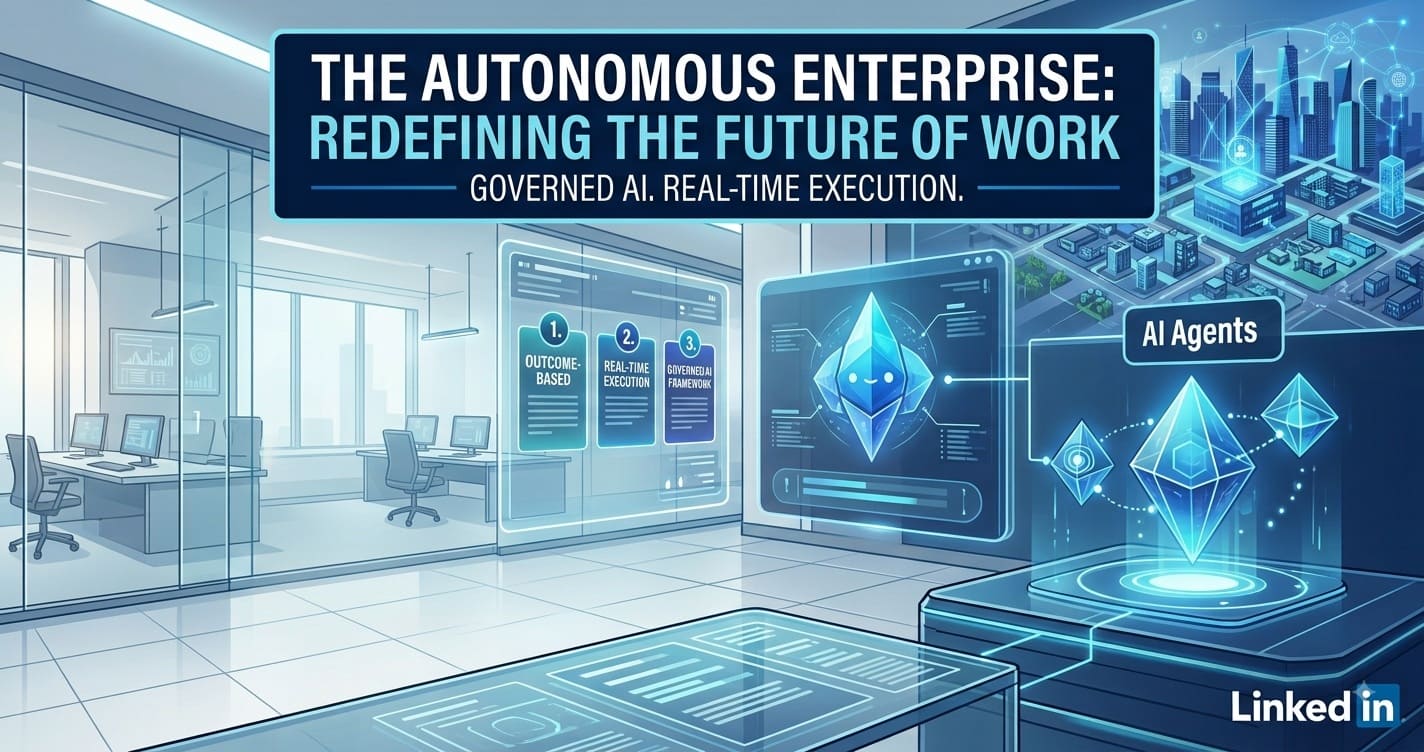
Beyond the Hype: How the Autonomous Enterprise Is Redefining the Future of Work

For the past few years, enterprise AI adoption has largely cantered on single-point solutions: AI chatbots for drafting emails, localized copilot tools, or basic rule-based automation. While these tools offer marginal productivity boosts, they fail to solve a fundamental operational challenge—fragmented, slow, and reactive business processes.

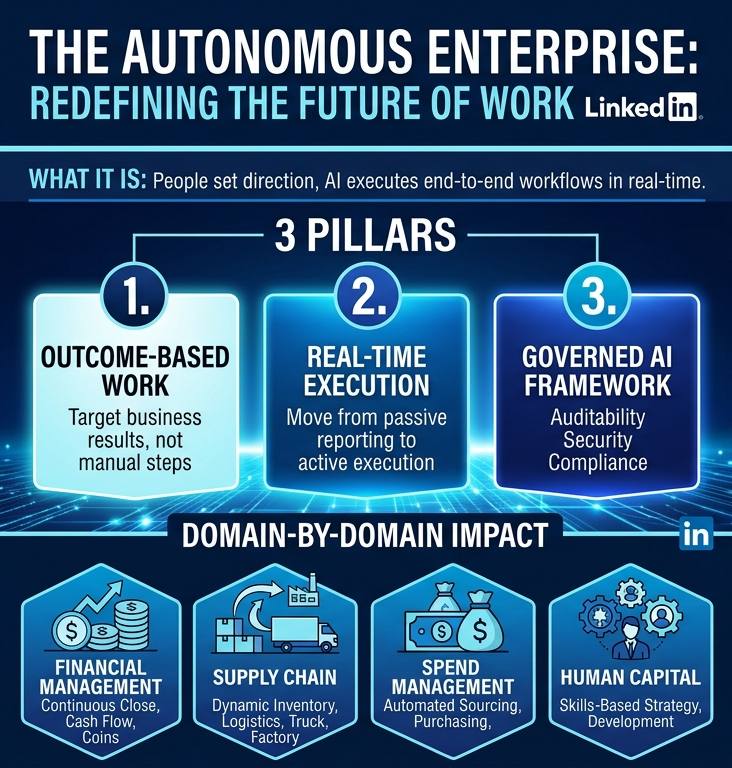
The next evolution of digital transformation moves beyond simple task assistance to The Autonomous Enterprise: an operational model where AI native systems execute end-to-end workflows in real time, enabling human teams to step up the value chain from process execution to strategic governance.

The Core Problem: The Limits of Traditional ERP & Point AI

In traditional enterprise environments, decision-making is inherently lagging:

  • Data Silos: Information is scattered across ERPs, HR tools, CRM, and supply chain systems.
  • Manual Handoffs: Processes stall at every cross-departmental boundary (e.g., Procurement waiting on Finance approval, who is waiting on Supply Chain data).
  • Reactive Operations: Systems focus on reporting what happened in the past rather than executing what needs to happen next.

The Autonomous Enterprise addresses this by shifting the operational centre of gravity: People set direction and parameters; AI continuously executes and refines operations.

The 3 Structural Pillars of Autonomous Operations

1. Shift from Process Execution to Outcome Management

Instead of requiring employees to navigate complex menus, fill out multi-screen forms, or track down status updates, work begins with an intended outcome. AI handles routine transactional execution, surfacing only high-stakes decisions that require human judgment.

2. Execution Grounded in Real-Time Business Context

Static dashboards tell you what broke yesterday. Autonomous systems leverage deep domain logic, unified data structures, and real-time context to identify bottlenecks, re-route supply chains, or process financial closes continuously as transactions occur.

3. Enterprise-Grade Governance & Auditability

Autonomy does not mean a lack of control. Every AI action, recommendation, and automated transaction runs on a governed foundation—ensuring strict compliance, role-based access control, and complete audit trails across both cloud and legacy architectures.

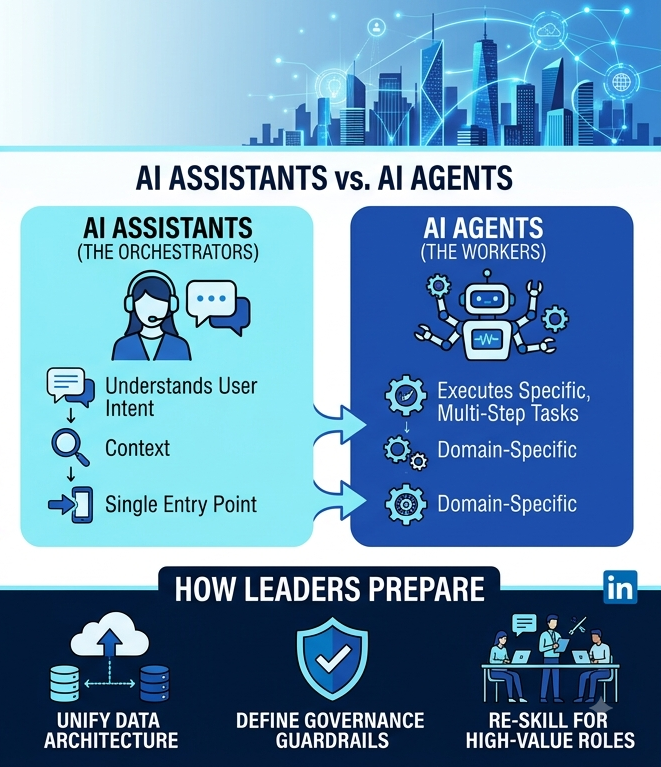
The Mechanics: AI Assistants vs. AI Agents

Understanding the mechanics of autonomous systems requires distinguishing between Assistants and Agents:

How does autonomous execution transform core enterprise business units?

1. Financial Management

  • Continuous Close: Replaces stressful end-of-month financial closes with continuous reconciliation and real-time ledger updates.
  • Autonomous Treasury & Compliance: AI monitors cash flow patterns and flags compliance deviations before transactions are settled.

2. Supply Chain & Manufacturing

  • Dynamic Inventory Replenishment: Material planning shifts from static re-order points to predictive, autonomous execution based on demand signals and supplier health.
  • Resilience at Scale: When disruptions occur, AI agents immediately calculate alternate logistics routes and re-balance inventory across distribution centres.

 3. Spend Management & Procurement

  • Automated Sourcing: AI continuously analyzes supplier market data, contract terms, and compliance records to optimize purchasing decisions.
  • Streamlined Invoice & Payment Matching: Multi-way matching happens instantly, routing only true anomalies to procurement specialists.

 4. Human Capital Management (HCM)

  • Skills-Based Talent Strategy: AI continuously maps workforce skills against emerging market demands, suggesting internal mobility pathways and personalized development programs.
  • Self-Service HR Orchestration: Routine employee lifecycle changes (onboarding, benefits adjustments) are automated without administrative overhead.

 How Leaders Should Prepare for the Autonomous Shift

  1. Unify Your Data Architecture: Autonomous AI is only as good as the contextual data feeding it. Prioritize harmonizing enterprise data models.
  2. Define Governance Guardrails First: Determine clear thresholds for where AI can act autonomously versus where human-in-the-loop validation is strictly mandatory.
  3. Re-skill for High-Value Roles: Shift team focus away from transactional processing toward strategic analysis, vendor relationships, and AI system oversight.

What’s Your Enterprise AI Strategy?

As business architectures evolve, where is your organization seeing the most friction—and where could autonomous operations make the biggest impact?